Is it bad to not sterilize baby bottles?
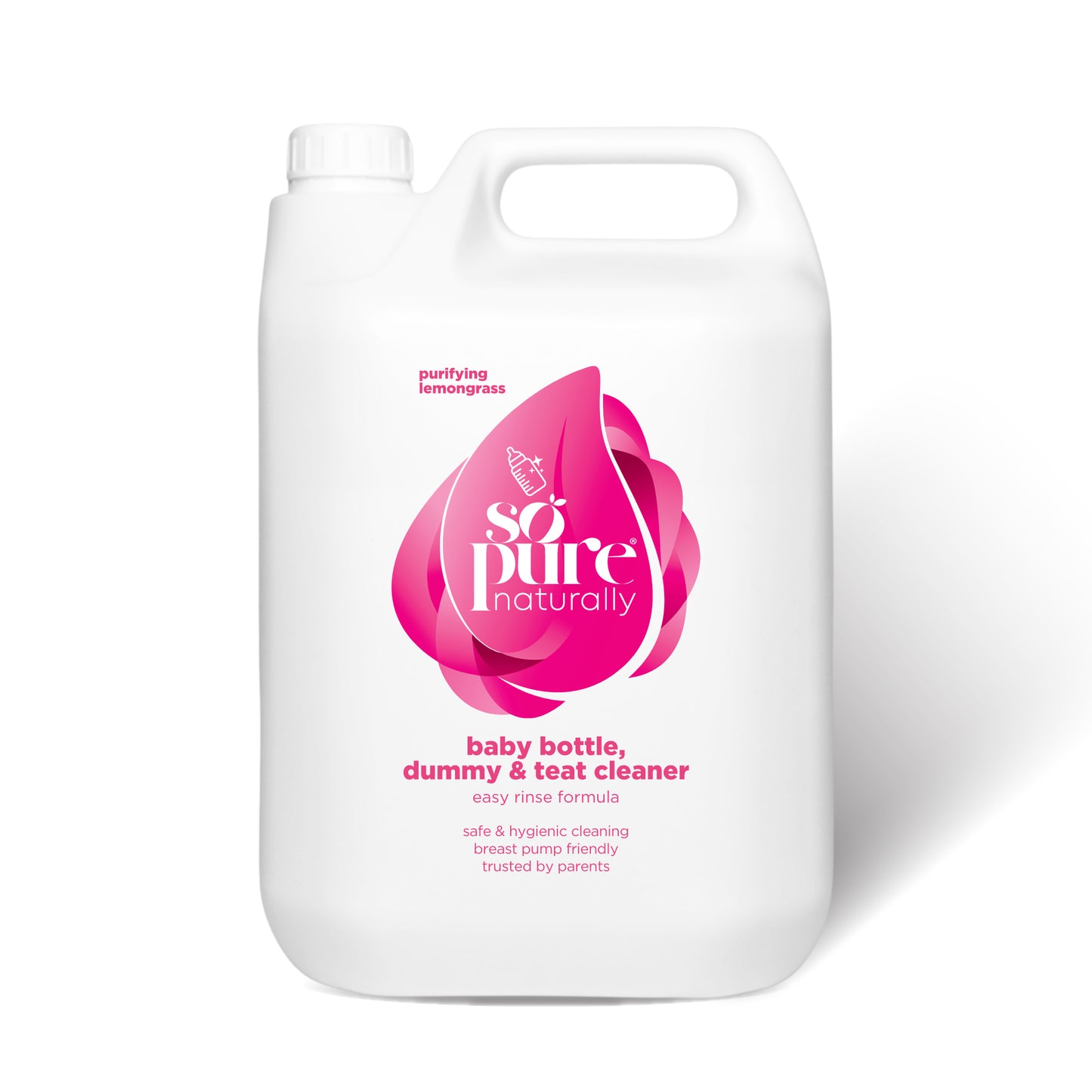
Washing and sterilising are two separate steps, and both matter. Guidance is to use clean and sterile feeding equipment for the first 12 months. A young baby's immune system is still developing. Wash first to lift the milk and formula, then sterilise. SoPure® Baby Bottle, Dummy & Teat Cleaner is the wash step. It rinses clean with no residue, and it does not replace sterilising.
How to remove yellow stains from bottle nipples?
Yellowing on a teat is usually milk protein and fat that has built up over time. Heat from repeated sterilising then sets it. Soak the teat in warm water with a bottle cleaner, then work the inside with a small teat brush. Replace any teat that stays discoloured or feels sticky. SoPure® Baby Bottle, Dummy & Teat Cleaner lifts milk residue with no enzymes and no synthetic fragrance.
What is the best way to clean baby bottles and nipples?
Take every part apart and rinse straight after the feed, so milk does not dry on. Wash in hot water with a bottle brush, and squeeze soapy water through the teat holes. Use a separate teat brush for the inside. Rinse well. About 5ml of SoPure® Baby Bottle, Dummy & Teat Cleaner in a basin handles a full feed's worth.
Does vinegar clean baby bottles?
Vinegar cuts limescale and helps with odour, but it is weak against milk fat. Milk fat is the actual problem in a baby bottle. It does not sterilise either. A dedicated bottle cleaner breaks down milk fats and proteins, then rinses out completely. SoPure® Baby Bottle, Dummy & Teat Cleaner is plant-powered and leaves no residue on the teat.
Is it okay to just rinse baby bottles?
A rinse moves milk around rather than lifting it out. The film left behind is what builds up between feeds. Wash properly with a bottle cleaner and a brush, then sterilise while your baby is under 12 months. SoPure® Naturally makes its Baby Bottle, Dummy & Teat Cleaner in Johannesburg. It has been trusted by 100,000+ South African mums since 2005.